UHP 1.0: iRacing, Logitech and D-BOX agree on a common language for haptic feedback
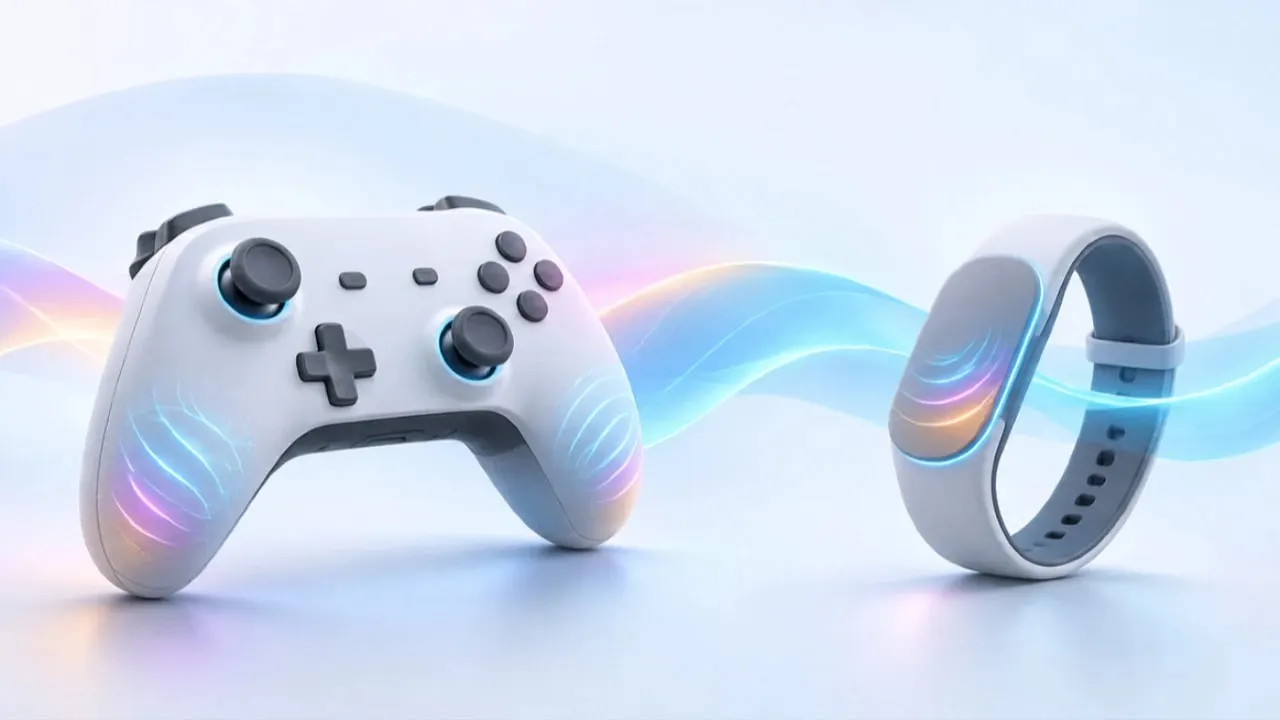 Racing peripherals may finally be rid of a zoo of incompatible commands: the industry organization Haptics Industry Forum has released the open specification Universal Haptics Protocol 1.0. Logitech, iRacing, D-BOX and several other specialized companies took part in its creation — meaning the standard was written with sim racing in mind as well.
Sim racing has long been bumping up against an everyday problem: the wheel, the vibration seat and the vest each talk to the game in their own language. The open Universal Haptics Protocol 1.0 specification from the Haptics Industry Forum promises to reduce all of this to a single set of rules — and people from the world of racing worked on it.
Who was involved
The specification was prepared by representatives of Logitech, TITAN Haptics, Hapticlabs, the iRacing simulator, motion platform manufacturer D-BOX and the University of Waterloo. For a site about speed, what matters most is that the authors include hardware and software that sim racers know firsthand.
Why it's needed
Previously, a separate layer had to be built for every device: manufacturers used different commands, and a studio that wanted to support the latest seat spent effort on a separate integration. UHP 1.0 offers developers a way to describe an effect once and not worry about whose hardware the player has.
How the standard works
- Base effects: the protocol introduces a common set of primitives — a jolt, a tremor, a pause — and unified fields for them: how long it lasts, how strong it is, at what frequency and how sharply.
- The device introduces itself: connected peripherals tell the program what they can do and exactly where they can deliver feedback (grips, triggers, seat back).
- A request from the game: the application sends a single universal call, and each device selects the specific "physics" for itself.
- Compatibility: the specification allows multiple effects to be layered and haptic sensations to be transmitted alongside audio, and it can work on top of the familiar USB HID and Bluetooth GATT.
In practice: a crash in a race
The game reports a collision — and then the magic of scale begins. A gamepad responds with a short click in your palms, while a D-BOX cockpit shoves the driver with its whole body. Yet the developer doesn't need to write two different pieces of code for these devices: they described the event once.
For now this is only about the specification's appearance — the source gives no specific timelines for implementation in games or a list of supported devices. But the very fact that Logitech, iRacing and D-BOX were at the table makes UHP 1.0 a notable event for the sim racing industry.
👉 Source: GoHa.Ru
And how do you feel about haptic feedback in racing — do you need it or does it get in the way? Share your opinion in the comments and follow the updates on nfs.place!